


Write to us and tell us about your research project. We want to understand your objectives and explore how CARTaGENE can contribute to your discoveries.
News
2026/10/15
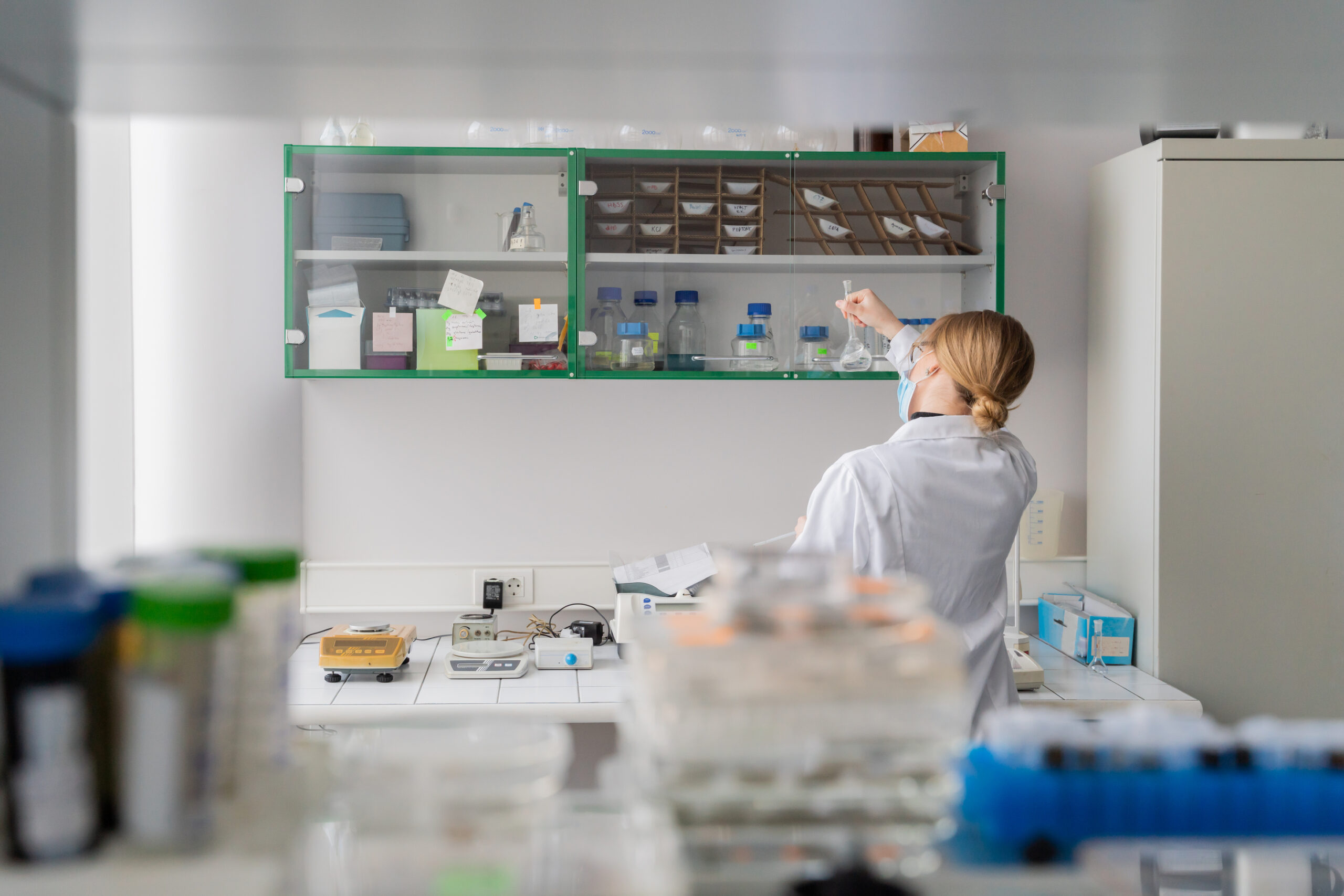
CARTaGENE is a longitudinal cohort and a public research platform of Santé Québec – CHU Sainte‑Justine that aims to accelerate health discoveries. It brings together biological samples and detailed data on the health and lifestyle habits of 43,000 Quebec residents aged 40 to 69 at the time of recruitment.
Through broad consent, these data and samples can be used by research teams from the public and private sectors for health research projects. The platform provides more than 13,000 variables with longitudinal follow‑up, including physical measures, environmental and nutritional data, MRI data, biochemical data, and genetic information.
These data are linked to administrative health databases dating back to 1998 (hospitalizations, diagnoses, medications, deaths, cancer registries, etc.). Genealogical reconstructions are also available for participants who contributed to the BALSAC project. CARTaGENE is part of the pan‑Canadian CanPath consortium, which harmonizes data from 300,000 individuals across the country.
Questionnaire data
Rich health data collected at recruitment and through follow‑up, including nutrition, living and working environments, COVID‑19 exposure, and more.
Linked data
Data linked from administrative health databases (MED‑ECHO, Cancer Registry), environmental data sources (CANUE), and a genealogical database (BALSAC).
Physical and cognitive measures
Detailed data on physical and cognitive status, including anthropometric measures, blood pressure, bone density, as well as tests of memory, reasoning, and reaction time.
Biochemical and hematological data
Key data derived from blood analyses, including complete blood count, blood glucose, lipid profile, electrolytes, as well as renal, hepatic, and thyroid function.
Genetic data
Genome‑wide genotyping data (including imputation) and sequencing data (whole genomes, RNA, exomes).
Biological sample
Blood derivatives (whole blood, plasma, serum), DNA, urine.

1
Create your account and submit your request
2
Evaluation by CARTaGENE’s access committee
3
Once approved, sign the access agreement

Write to us and tell us about your research project. We want to understand your objectives and explore how CARTaGENE can contribute to your discoveries.
Discover the diversity of research projects conducted using CARTaGENE data.

No. International researchers can also access CARTaGENE data.
All steps are described on the portal. You will need to provide a research protocol, institutional ethics approval for this protocol, a CV, and proof of funding (especially for access to samples).
The principal investigator must hold research privileges within their institution (i.e., be an independent researcher). This person will be responsible for signing the access agreement. Postdoctoral researchers and students can be listed as co-investigators in the collaborators section.
This is the person authorized to sign agreements on behalf of the institution. Contact the contracts office or legal affairs office for guidance.
Exemptions are not recognized by our institution. In this specific case, your project will be submitted for review by the CHU Sainte-Justine ethics committee.
Yes. All consent forms are available in the Documents section of the portal. This section also includes other important documents, such as questionnaires, the access agreement, and the Access Policy.
Details about access fees are provided in the Access process section of the portal. Data access fees cover a maximum period of five years.
Absolutely. You are encouraged to use CARTaGENE for all your projects. Many researchers have more than one project with us.
Access to raw administrative data requires a request through the ISQ’s Zone recherche portal. CARTaGENE will handle this process on your behalf. It is also possible to obtain certain derived data. If you are interested in administrative data, please contact us at .
There is no limit to the number of projects on the same topic.
A list of approved projects is available here. Principal investigators are identified, and you may contact them to explore potential collaborations.
Yes. A dynamic catalog is available.
If the linkage is based on postal codes, it is very likely feasible. Please contact us at .
Questionnaire data are provided as compressed CSV files. Due to the large size of some files, we recommend using R for analysis rather than Excel, which is less suitable for large datasets.
We use the secure Nextcloud platform for standard data transfer. When data are shared, you will receive two separate emails:
Given the large size of genetic data files, these are transferred via the Globus service instead. A Globus account is therefore required to receive this type of data.
The security requirements for using CARTaGENE data are detailed in Appendix 2 of the access contract. As a reminder, the minimum requirements include:
Researchers are responsible for ensuring that all measures described in the agreement are followed throughout the duration of the project.
Data are shared on a per-project basis. You may collaborate with other researchers within a single project, but each project must be the subject of a separate access request.
Yes. You simply need to submit an amendment to add collaborators.
If they wish to collaborate with you on your project, you can submit an amendment to add them as a collaborator. If they want to use the data for their own project, they must submit a separate access request.
Each recontact request is evaluated individually. Please contact us at to initiate the discussion and assess the feasibility of your project.
Whole blood, whole blood for RNA (Tempus tubes), dried blood spots (Whatman cards), plasma (PST, EDTA, sodium citrate, or Supelco collection tubes), serum (SST collection tubes), urine, and extracted DNA.
Details about blood samples are available in the Samples section of the portal.
For some participants (n ≈ 1,500), blood samples (whole blood, plasma, serum) were collected at recruitment and again five years later. We also have dried blood spot samples collected as part of the COVID‑19 study. Details about blood samples are available in the Samples section of the portal.
Samples are a valuable and non-renewable resource. Therefore, we provide the minimum volume required based on the analytical technique used. As an indication, our plasma and serum aliquots are 500 µL.
All pricing details are available in the Access process section of the portal.
The type of data to be returned depends on the nature of the project. It may include, for example:
The type of data to be returned is generally discussed with the CARTaGENE team during the project feasibility assessment. A detailed description of the datasets to be returned is provided in Appendix 3 of the access agreement.
Returned data may be shared with other researchers as part of new projects.
Yes. This requirement is specified in clause 4.7 of the access agreement: At least thirty (30) days before publishing the results of the Research Project, a copy of the manuscript that the researcher intends to publish must be provided to CARTaGENE to verify any potential risk of participant identification.
The following statement must be included in the Acknowledgements section: This research has been conducted using Data/Biosamples from CARTaGENE (https://cartagene.qc.ca/en). CARTaGENE receives financial support from Genome Québec (Ministère de l’Économie, de l’Innovation et de l’Énergie), the Canadian Partnership Against Cancer and Health Canada.
Yes. We can also provide an estimate of access fees. Ideally, please send us a draft letter. At a minimum, we will need: